10 August 2021
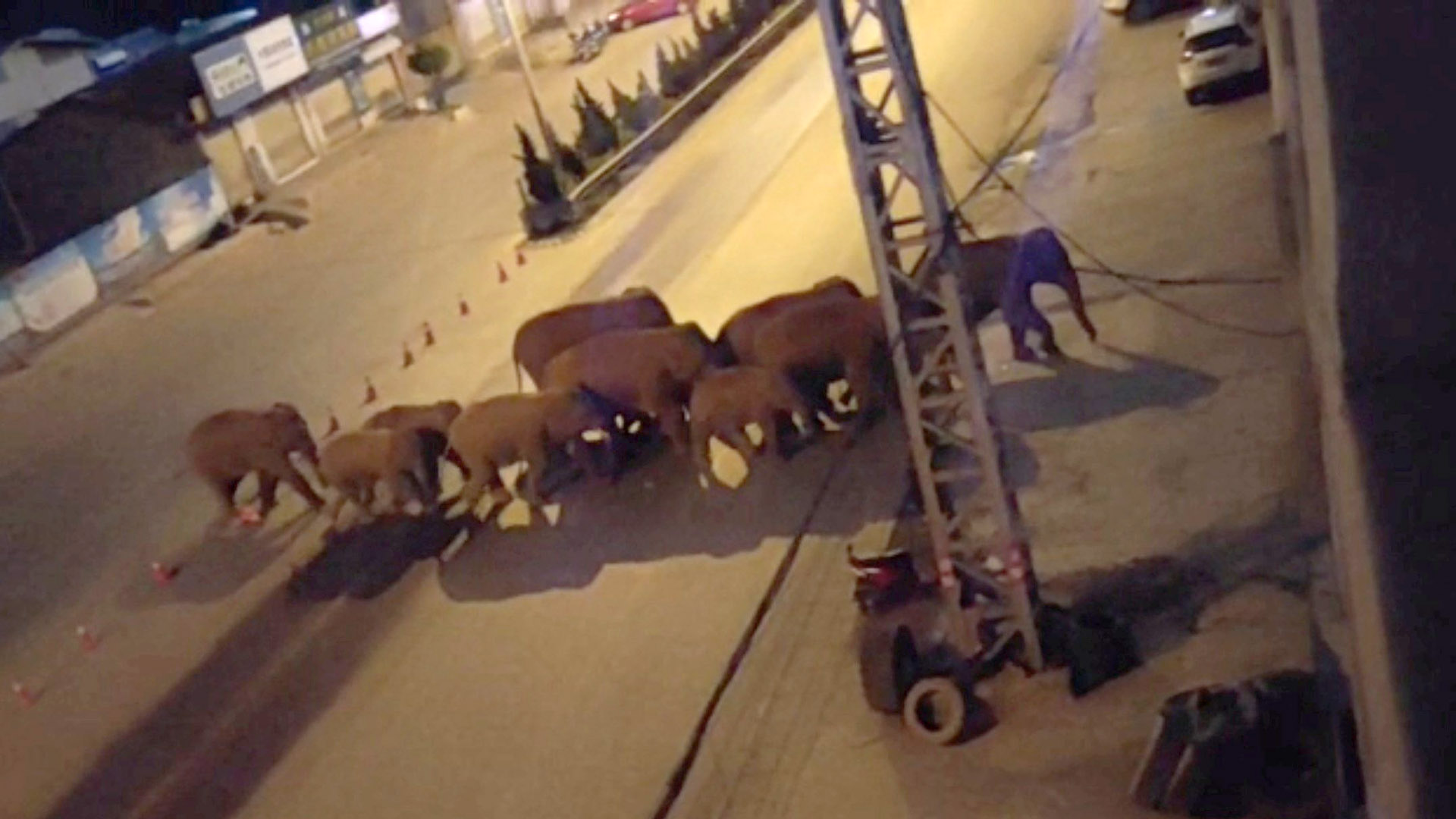
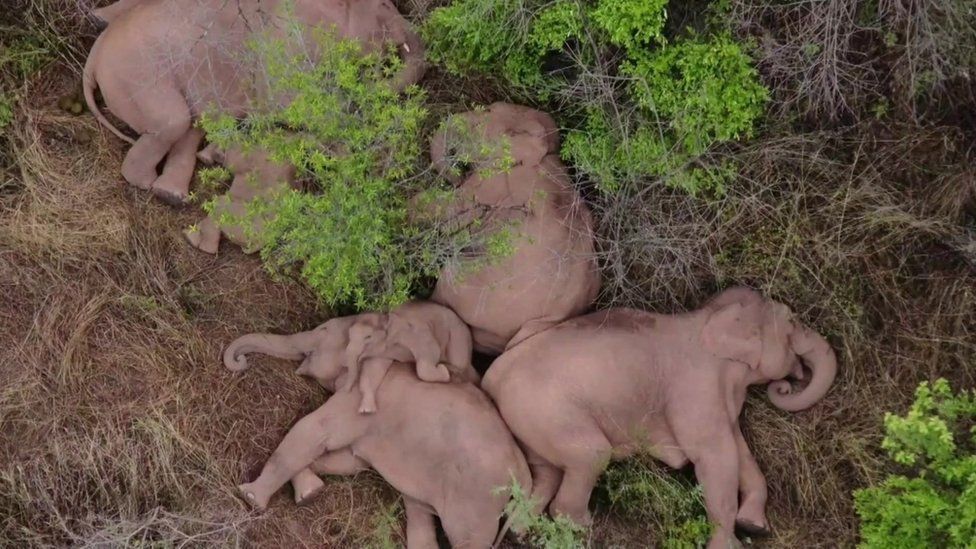
Who would have thought before it happened, that a leading news from China would actually be of a wandering herd of elephants? That China would use every modern means including drones and supply trucks, fork lifts and earth movers, to keep a group of 15 elephants away from urban centres, removing walls and fences that could inhibit their path and make fervent efforts to guide them back to their home- a nature preserve in Yunan province? And that would make for headlines both at home and abroad?
When the elephants first started their trek nearly a year ago, they emerged from the Mengyangzi Nature Preserve in south west Yunan. They have seen been through many villages and towns, barely managing to steer clear of Kunming, its capital! The Chinese were slow to pick up the trail of the herd, but one viral video of a police posse clearing off a village road to allow the elephants to move and their ‘parade’ on the arterial road, and overnight all of China was following it and so was the international media. The Chinese TikTok, Douyin is full of their clips and updates.
What would cause the Chinese to suffer 1 million and counting US $ of losses in this trek by elephants as damage from the herd in farmlands not to mention the losses due to diversions, traffic halts and shuttering of businesses along their path? What could explain the monitoring of these animals as they trekked the ‘longest recorded’ elephant trek in annals of Chinese records? It shows fundamentally, a transition on part of the mindset of Chinese people, from a ‘developing’ and ‘capable of excusing themselves from any responsibility’ nation to one that is more than willing to undertake such an endeavour. What baffles experts is if this trek was other than an act of poor leadership by the leader of the herd, probably due to inexperience? Is Climate Change involved in this trek? Experts are on record that the herd may have actually been scouting for new territory, possible since their existing habitations are under pressure from rubber and tea plantations!
Whatever be the cause of the herd’s trek, the manner in which the Chinese authorities dealt with it, offered hope to conservationists. That is besides the fact that the actual elephant population in the wild in China is in the low hundreds, estimated to be not more than 300. That a cynic would argue, a case of too little too late! As of last 24 hours, Chinese provincial authorities have confirmed that the herd is now in good natural territory and proximate to their Preserve and moving in what can be called ‘home stretch’ finally! In the midst of a pandemic, where China resorts to routinely mass testing and forcing lockdowns, the Chinese have managed to keep the herd safe and goad it back to safety of its natural habitation, is indeed a miracle!
One of the key reversals of human understanding is the role elephants play in nature, from being a grazer and viewed as one that depleted forest cover, including at one time being culled for reducing the pressure on natural habitats, modern understanding of elephants, and indeed of all grazing populations, has evolved to appreciate how grazing animals are crucial to ecological sustainability in nature itself. Wildlife expert and naturalist Allan Savoury is a classic example of one such votary who fortunately made the u turn…from culling thousands of the elephants and viewing them as nothing but oversized rats or vermin, that literally trampled down Africa’s grasslands, he determined how crucial herding was not just of ungulates like deer, but even elephants as critical for their well being! In fact, now using zoological observations, he has come up with what he calls ‘Holistic Management’ where modern cattle herds can be made to mimic the natural way of herding of wild animals, to prevent grazing land to become fallow and eventually become desert! In fact, leading experts are now actually turning their heads so far as to even question the premise of agriculture as boon, a signal development by humans, that possibly converted our very approach to gender, to social structure, to organisation of the species and afforded us the base to expand as a species population as well as to progress technologically. The distinct thought of healing the earth, by giving up agriculture and reverting to herding and gathering food, is not a romantic fantasy of nerds who are obsessed with human evolution, but has now increasingly authorship that can be called serious. The work of Elizabeth Tree titled ‘Wilding: Returning nature to our farm’ published in 2019 was a major insight in practical terms for conservationists, who could now argue that such wilding was not just planet saving but also sustainable for human profit. It also makes for questions on vegetarianism and moralism, for the obvious source of future food could be ‘wild meat’, ‘wild cereal’ and wild fruit, which would make sense in a mixed diet, mimicking our ancestor hominid species.
So, a question that is out there, is if these Chinese elephants were marking a future course for their species, outside the confines of sanctuaries, and if humans can be capable of embracing the findings of science that show that our ‘way of life’ or the ‘normal’ as we embrace it now, with factories, with food factories and industrialised scale of agriculture, is one that needs to get a boot!
Like how now major media and science can shout with confidence that the current climate ravaging the planet is actually our Climate Challenge, we can hopefully say with equal confidence that ‘wilding’, capping agriculture, switching our diets, herding and gathering are what will offer us a sustainability and a set of options that can save the planet from us! When are we going to see a movement that excites mass consciousness that would focus on what arguably should be ‘bread and butter’ issues? Directly the use of palm oil in cooking is one of the biggest contributors to global deforestation, loss of biodiversity and more. The use of soybean in processed foods is another. In fact, a double whammy is how this use of biofuel by blending fossil fuels with plant extracted oils like palm oil makes it worse for the environment. It is like global foray once to harvest jatropa for blending as biofuel. What we need is a critical appraisal of end to end effects of any proposal like blending, from choice of oil to how its harvesting impacts the already fragile environment. There are some areas, like wind harvesting, where design and scale can offset the initially observed drawbacks of windmills. Another area is urban transport, through automobiles which were considered major pollutants, now seeing a revolution of sorts through battery operated vehicles. Even 5 years back, no one could have foreseen the massive upscaling of eVehicles particularly in passenger segment, and now increasingly in goods carriage as well. That countries are planning phasing out of diesel and petrol run vehicles by 2040, shows how much technology too can effect changes in favour of sustainability. Even more importantly, the way societies adapted to this pandemic shows how humans can change their basic approach to commutes. From travel for work to travel for only leisure could well become the norm in the next decade, as increasingly companies and workers relocate their work environment, either through Work From Home or from live in campuses.
What we need is not ‘feasibility audits’ but ‘sustainability audits’. If the elephants of Yunan trekked out of their gilded environment for an entire year, humans too need to scout likewise and see everything we have determined as ‘progress’ so far from the prism of ‘sustainability’. It could well herald a new beginning for our species as well…
 indiarubberman.com